


How to Improve Your Jewellery Brand's Social Media Presence in the EU
The EU Jewellery Market Is Growing — But Most Independent Brands Are Invisible Online
Here is a fact worth sitting with: the European fashion jewellery market was valued at $12.13 billion in 2025 and is projected to reach $24.30 billion by 2034, growing at a CAGR of 8.03%.
At the same time, the rise of social commerce — where purchases can be made directly through Instagram and TikTok — has shortened the path to purchase, capitalising on impulse buying behaviours triggered by influencer content.
So the demand is there. The platforms are there. The buyers are actively scrolling.
And yet, most independent jewellery brands in the EU are posting inconsistently, shooting product images on their kitchen table, and wondering why engagement is flat.
Why Social Media Doesn't Work for Most Jewellery Brands
The problem is rarely effort. Most jewellery founders post regularly enough. The problem is that they post content instead of a posting strategy.
There are a few patterns that show up again and again:
Product photos with no visual identity — every post looks like it was made by a different brand
Captions that describe what the piece looks like, not what it means or who it is for
No consistent content rhythm — three posts in one week, then silence for ten days
Reels shot in bad light, edited with the wrong audio, posted without consideration of EU audience time zones
No data. No tracking. No idea which posts actually drove someone to the website or into the DMs
According to a 2023 study by the European Consumer Organisation, 74% of shoppers prefer online browsing for jewellery because it allows side-by-side comparison of materials, pricing, and reviews. That means your social media is not just a mood board — it is where buying decisions are actively being formed.
If your feed does not communicate trust, quality, and clarity within the first three seconds, that buyer moves on to the next brand.
What Actually Moves the Needle: 6 Concrete Strategies
1. Build a Visual Identity That Is Recognisable in 0.5 Seconds
A visual identity in social media terms is not just your logo. It is the combination of your colour palette, your lighting style, your background textures, your model aesthetic, and your typography in Reels and Stories.
When a buyer scrolls past three of your posts in a row — on the same day, while browsing a hashtag — they should recognise your brand without reading the handle.
To build this:
Define two to three colours that appear consistently across every post
Choose one lighting style (natural diffused, studio white, moody dark) and stay in it
Decide on one or two background surfaces and use them consistently
Create a Canva or Adobe template for your Reels covers and carousel headers
This is how DTC jewellery brands focused on storytelling and social engagement are gaining traction by bypassing traditional retail. Brands like Mejuri and Brilliant Earth are reporting double-digit growth in 2025, powered primarily by Instagram and TikTok-driven acquisition funnels.
2. Post Product Images That Do the Selling Before You Do
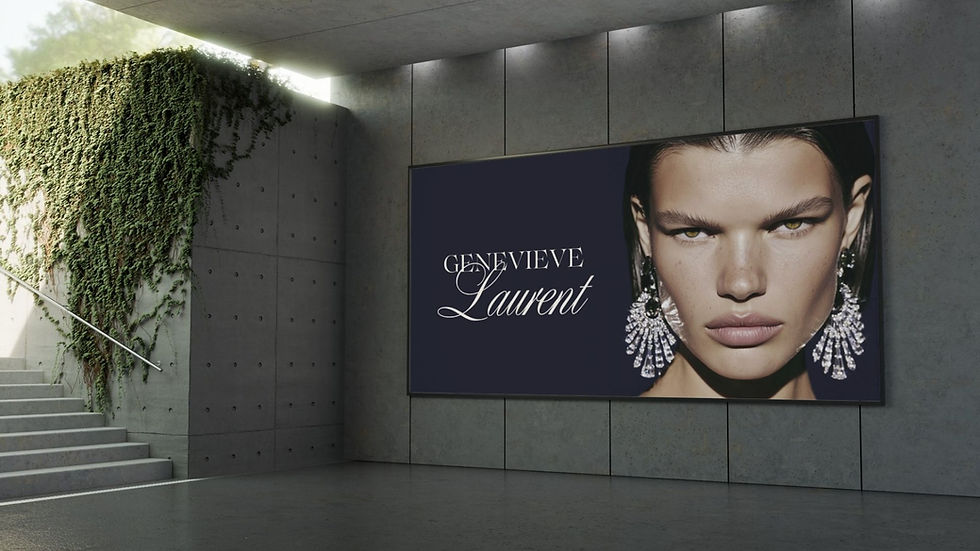
Your product photography is your most important asset on social media. A badly lit image of a beautiful ring will underperform a well-shot image of an average ring — every time.
For EU audiences in particular, aesthetics carry enormous weight. French, German, Italian, and Scandinavian buyers are exposed to very high design standards daily. A blurry product shot next to a French Vogue-quality image from a competitor brand is not a competition.
What professional jewellery photography for social media includes:
Clean product shots (multiple angles) for feed posts and e-commerce
Model/lifestyle images that show scale and how the piece is worn
Reels footage — macro close-ups, movement, texture details
Story-format assets — already sized correctly, not cropped awkwardly
Brands that shoot monthly maintain visual freshness and seasonal relevance. Good news, we’ve put together courses on how to photograph your jewellery.
3. Use Content Formats That the EU Buyer Cycle Rewards
The EU jewellery buyer does not behave like a US buyer. Research consistently shows more deliberate decision-making, longer consideration periods, and stronger emphasis on brand story and provenance.
This means short-form content alone is not enough. You need a mix:
Format | Purpose | Frequency |
Reels (15–30s) | Discovery — reaching new audiences | 3–5x per week |
Carousel posts | Education — materials, process, story | 2–3x per week |
Stories | Relationship — behind the scenes, polls | Daily |
Single product image | Commerce — clean, shoppable | 2–3x per week |
Long-form Reels (60s+) | Brand depth — founder story, process | 1–2x per month |
Stories are where trust is built. Reels are where new audiences find you. Carousels are where buying decisions are made. You need all three working together.
4. Target EU Market Segments, Not "Everyone Who Likes Jewellery"
The EU is not one market. A French buyer interested in artisan gold has completely different purchase motivations than a German buyer looking for sustainable silver pieces or a Spanish buyer shopping for fast-fashion earrings.
The online segment for European jewellery is projected to expand at a CAGR of 11.2% from 2026 to 2034, driven by the proliferation of mobile commerce, advanced visualisation technologies, and the convenience of accessing a global variety of styles from home.
This means the digital shelf space is expanding — but so is the competition.
To stand out, define your target buyer segment precisely:
Which country or region are they in?
What is their price sensitivity? (£50–200 per piece vs £500+?)
Are they buying for themselves or as gifts?
What occasions drive their purchases?
Once you know this, every caption, hashtag, and paid ad can be pointed at the right person instead of broadcasting at nobody in particular.

5. Run Campaigns With a Measurable Sales Goal
A campaign is not "posting more in December." A campaign is a structured content push — with a defined start and end date, a clear offer or narrative, consistent visuals, and a call to action that leads somewhere trackable.
A 2026 benchmark by Sprout Social found that jewellery brands posting on TikTok and Instagram Reels at least five times per week saw a significant uplift in engagement and direct sales.
Campaign types that work for EU jewellery brands:
Collection launches — 10–14 days of build-up content before and during launch
Gifting season pushes — Christmas, Valentine's Day, Mother's Day (dates vary by country)
Limited edition drops — scarcity with a clear deadline
Brand story arcs — three to four-week series on your origin, your materials, your process
Without a campaign structure, your individual posts are orphaned content. They do not compound.
6. Let Chocianaite Handle the Content — So You Can Focus on Making Jewellery
Here is where many founders hit a wall: the strategy makes sense, the intention is there, but execution collapses under the weight of running the actual business.
Chocianaite's packages are built specifically for jewellery brands. The offer is not generic social media management — it is content creation and management designed around how jewellery actually sells.
The Professional package includes:
Custom social media strategy built on a brand and competitor analysis
10 product images and 10 model images per month — shot professionally
10 video cuts per month — reels, close-ups, styling footage
8 Story batteries and 8 single-story monthly
3–5 captions per week
Paid and organic influencer reach
Campaign creation and launch (clients have reported approximately 30% sales increase per campaign)
Post scheduling and hashtag strategy
Monthly performance tracking
The Business package includes professional content arrangement, copywriting, 10 products, 10 model images, 10 videos, and an Instagram and web review before work begins.
The Standard package is content production — 10 product images, 10 model images, and 5 videos per month — for brands that have a strategy but need consistent creative output.
One important distinction from Chocianaite's FAQ: visual growth is handled entirely.
Audience engagement — replying to DMs, liking posts, following accounts — remains the founder's responsibility. The reasoning is direct: building relationships can only be done by the person behind the brand.
Ready to hand it all over? Fill out the form:
Why 2026 Is Not the Year to Wait
EU law mandates 14-day free returns for distance sales, giving buyers confidence to experiment with jewellery online. This has removed one of the last major barriers to online jewellery buying. The buyer behaviour has already shifted. What has not caught up, for most independent brands, is the quality of their social presence.
In 2026, brands using data-driven targeting and AI-powered personalisation are generating 3.2x higher jewellery e-commerce conversion rates than traditional campaigns.
Every month without a coherent social media strategy is a month of compounding disadvantage. The brands that build audience trust now, through consistent and high-quality content, will not be easy to displace in 12 months.
Not Sure Where to Start? Book a 1:1 Visual Audit
Before committing to a full management package, it helps to know exactly what is working and what is not.
Chocianaite's 1:1 Visual Audit is a private one-hour video call with founder Auguste. In that session, you get a thorough analysis of your current visual strategy, a clear breakdown of the key mistakes hurting your social media performance, and a personalised step-by-step action plan to improve your feed — immediately.
The audit is for you if:
Your engagement is flat, and you don't know why
Your aesthetic is inconsistent across posts
You don't have good images to post
Instagram's algorithm feels unpredictable, and you have stopped trusting it
You want to grow your jewellery business on social media, but don't know the next move
One hour. One honest look at your brand. One clear action plan.


Comments