


Trending Stones and Metals for Autumn 2026: What to Photograph and How to Sell It
Updated: 3 days ago
Every autumn brings a colour palette shift. This year, that shift is colliding with a genuine pricing event. Gold has climbed roughly 70 percent over the past year, its strongest annual run since 1979, while silver has more than doubled.
For a jewellery brand, that means two things happen at once. First, the metal itself becomes a bigger share of the retail price, which pushes buyers to ask harder questions about what they are paying for. Second, gemstones become a relatively cheaper way to deliver colour, scale, and personality in a piece, which is why colour is dominating every 2026 trend report rather than metal weight or diamond carat.
The stones and metals below are the ones positioned to benefit from that shift, or to need repositioning because of it.
Trending Gemstones for Autumn 2026
Tsavorite Garnet
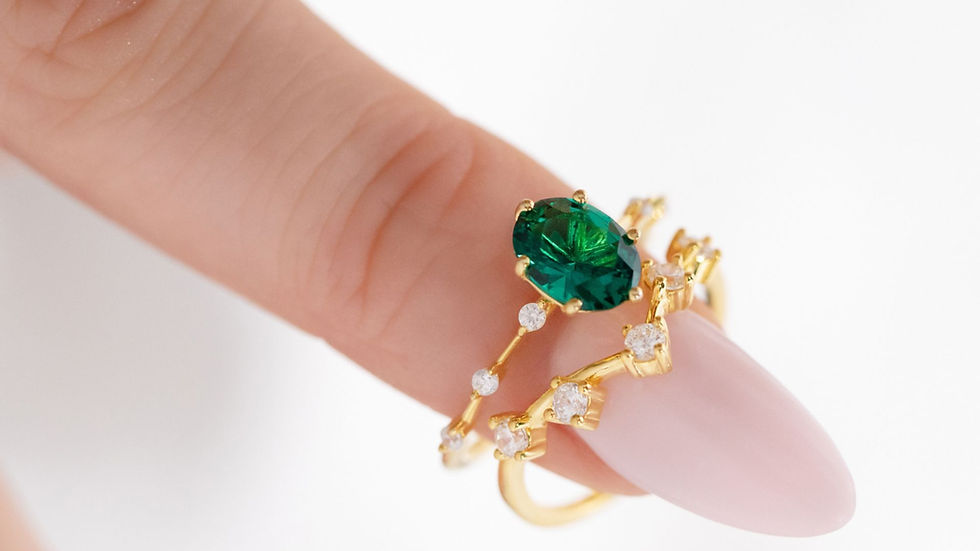
Tsavorite garnet has emerged as the green gemstone of choice for autumn 2026, prized for a vivid chrome-green colour and a clarity that typically outperforms emerald at a comparable size. Because it usually arrives free of visible inclusions, it reads as a fresher, cleaner green in photographs than the mossier tone many buyers associate with emerald.
Photograph it: Light tsavorite from a single angled source rather than a flat, even one. Garnet's brilliance depends on internal light return, and a diffused softbox from directly above will mute the fire that makes the stone worth choosing over a cheaper green alternative. A dark backdrop protects the saturation; a white one will wash it out.
Sell it: Lead with the clarity comparison. Buyers researching green stones already know emerald and jade. Positioning tsavorite as the cleaner, more durable green (it sits at 7 to 7.5 on the Mohs scale, versus emerald's more brittle structure) gives your sales copy a concrete reason to trade up rather than a purely aesthetic one.
Deep Sapphire and Tanzanite
Winter-toned buyers are gravitating toward high-contrast stones this season, with deep blue sapphire remaining one of the "Big Three" alongside ruby and emerald, and tanzanite offering a rarer, more violet-leaning alternative. Cool, icy blues are becoming a core seasonal palette, with tanzanite singled out for its depth against more accessible options like aquamarine and blue topaz.
Photograph it: Sapphire and tanzanite both shift colour depending on light temperature, so shoot under consistent, neutral daylight-balanced light and check colour accuracy against a grey card before editing. A warm light source will pull sapphire toward a muddier navy and lose the violet undertone that makes tanzanite distinctive.
Sell it: Because these stones sit at different price points for a similar visual effect, offer both in product copy and let the buyer choose their entry point. A sapphire piece and a tanzanite or blue topaz piece photographed with the same styling let a buyer trade up or down within the same aesthetic rather than leaving to compare elsewhere.

Spessartite Garnet and Golden Topaz
Autumn palettes this year lean into a rich, earthy warmth built around citrine, spessartite garnet, and golden topaz, a direct contrast to the icy blues and greens carrying the winter-facing end of the season. Deep orange spessartite garnet is named among 2026's strongest colour performers, alongside apple green tourmaline and rich aquamarine.
Photograph it: Warm-toned stones photograph best against a warm-neutral or dark walnut background rather than a cool grey or white one, which can make orange and honey tones look artificially saturated once corrected in post. Pair with yellow or rose gold settings in the same shot; white metal settings tend to fight the stone's warmth rather than frame it.
Sell it: These stones sit naturally alongside seasonal colour-matching content: think scarves, knitwear, and autumn foliage in lifestyle imagery. Because the palette is genuinely seasonal rather than evergreen, time-limited collection framing (an autumn capsule rather than a permanent line) suits these stones better than most.
Pink Sapphire and Rubellite Tourmaline
Pink sapphires and rubellite tourmalines are bringing warmth to autumn's colour narrative this year, ranging from soft rose to intense fuchsia. The same report notes that pairing these warm pinks with cooler-toned centre stones, such as sapphire or tanzanite, creates a contrast that reads as more considered than a single-stone piece.
Photograph it: Shoot pink stones with a slightly cooler white balance than you would a red stone; pink sapphire and rubellite can drift toward an unflattering coral or salmon tone under warm light. A soft, diffused source flatters pink stones better than the hard directional light used for garnet, since the goal here is glow rather than fire.
Sell it: Pair pink stones with a cooler accent stone in at least one hero image. The toi-et-moi and multi-stone pairing format that is driving a meaningful share of 2026 birthstone and personal jewellery sales works particularly well with this stone combination, and gives a reason to feature two SKUs in one product story rather than one.

Bicolour and Watermelon Tourmaline
Tourmaline is showing up as more than a rubellite accent this season. Trade coverage of the 2026 Las Vegas jewellery shows names bicolour and watermelon tourmalines specifically among the timely stone choices buyers are gravitating toward, alongside violet and red spinel and mandarin garnet. Watermelon tourmaline, with its natural pink-to-green colour zoning, gives a single stone the kind of built-in colour story that would otherwise require pairing two separate gems.
Photograph it: Bicolour stones need light that reaches both colour zones evenly, so avoid a single hard source angled from one side, which will properly expose one half of the stone while underlighting the other. A slightly larger, softer light positioned centrally above the piece keeps both the pink and green zones readable in the same frame. Shoot a straight-on macro shot as the hero image; an angled shot can hide the colour transition that is the entire point of the stone.
Sell it: The novelty of a naturally occurring two-colour stone is the story, so say so explicitly rather than assuming a buyer will notice. Each stone's colour split is unique, which supports genuine one-of-one product copy for handmade and small-batch pieces, and gives a legitimate reason to photograph and list an item as a single, non-repeatable piece rather than as part of a standard range.
Ruby, Garnet, and Red Spinel
Warm reds are staging a comeback this season. Rubies, garnets, spinels, and rubellite tourmaline are described as radiating passion and assurance in the current colour cycle, with red spinel in particular gaining traction as a lower-cost alternative to ruby. A well-cut spinel in an oxidised silver setting is being flagged as one of this year's strongest under-the-radar buys for buyers who want a red stone without a ruby price tag.
Photograph it: Red stones are the easiest colour family to overexpose. Meter slightly under rather than over, since it is far easier to lift shadow detail in post than to recover blown-out highlights on a saturated red stone. A dark backdrop again does the heavy lifting for colour depth.
Sell it: Spinel's value proposition is entirely comparative, so say so directly. Naming ruby in the same sentence as spinel, and explaining the price and durability difference, gives buyers researching red stones a reason to consider your product over a straight ruby search result.

Trending Metals for Autumn 2026
Yellow Gold, Repositioned Around Weight
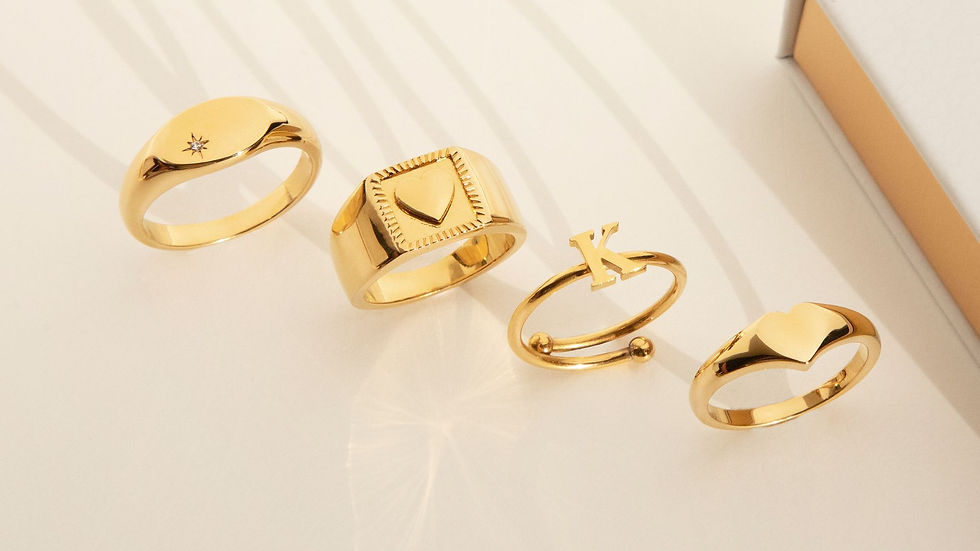
Yellow gold remains the season's dominant metal story on the runway, but the pricing environment has changed what "gold jewellery" means commercially. Some manufacturers are responding to record prices by shifting toward lighter, hollow, and mixed-metal constructions that preserve margin while keeping a gold-forward look, alongside a documented rise in interest in gold-filled and gold-plated pieces.
Photograph it: Lighter, thinner gold pieces need harder, more directional light than the heavy chunky chains that dominated recent seasons. A softbox that once made a heavy chain look substantial will make a lighter-weight piece look flat and insubstantial by comparison, which works against the piece rather than for it.
Sell it: If a piece has moved to a lighter construction to manage cost, say so plainly rather than letting the buyer discover the gram weight difference on delivery. Framing it as considered design (wearability, comfort, everyday use) rather than a cost-cutting measure protects trust and matches how buyers are already talking about gold jewellery this year.
Platinum and White Gold
With gold and silver both at record highs, platinum and palladium are seeing renewed attention from consumers looking for durable, stylish options at better relative price points. Platinum itself hit a record high alongside gold and silver in December, up over 160 percent year to date, so the "cheaper alternative" framing needs a caveat: platinum is not immune to the same commodity cycle, even where it remains a relatively better value than gold gram-for-gram in certain markets.
Photograph it: White metals need cooler, cleaner lighting than yellow gold to avoid a slightly yellow cast creeping into supposedly white metal. Check white balance carefully against a grey card, and avoid shooting white metal pieces under the same warm lighting setup used for a gold-heavy shoot earlier in the same session.
Sell it: Durability is the honest selling point here, not just colour preference. Platinum's density and resistance to wear over decades is a genuine, verifiable claim that justifies its price relative to white gold, and it is a claim buyers researching an investment piece are actively looking to have confirmed.

Sterling Silver and Oxidised Silver
Silver's own price rally, up over 150 percent year to date and driven partly by industrial demand and export controls out of China, has not stopped it from functioning as the accessible entry point of the metal market. Alternative metals including high-quality silver are drawing more attention from consumers as gold prices strain budgets, particularly in the handmade and bohemian segment where oxidised and textured silver finishes are already established.
Photograph it: Oxidised silver's whole appeal is in its texture and tonal variation, so a flat, even light source will make it look dull rather than intentional. Use raking light at a low angle to bring out engraving, hammered texture, or antiqued detailing, and avoid over-polishing pieces before a shoot if the oxidised finish is the actual product feature.
Sell it: Position silver honestly as the accessible entry point into your collection rather than apologising for it. With gold jewellery consumption falling in fine-weight terms across major markets this year, a strong silver line is a genuine acquisition tool for bringing new buyers into a brand before they trade up.

Mixed Metals
The end of metal-matching continues into autumn. Layering gold with silver, or platinum with rose gold, has moved from a styling experiment to a confirmed, consistent search direction across Google Trends and social platforms through 2026.
Photograph it: Keep the number of pieces in a mixed-metal shot low, three or four rather than a dozen, so each metal tone stays distinguishable rather than blurring into an indistinct mass under editing. Shoot under consistent, neutral light and correct white balance manually rather than trusting a camera's auto setting, which tends to average warm and cool metals into the wrong tone for both.
Sell it: Mixed-metal styling is a genuine cross-sell opportunity. A product page or email that suggests a specific silver piece to pair with a gold piece a buyer has already viewed converts on styling logic rather than discounting, which protects margin better than a straightforward multi-buy offer.
Every material above needs a different lighting and styling decision to sell convincingly, and getting it wrong is expensive: a reshoot costs time inside a selling window that is already narrower than most brands plan for. Chocianaite works through exactly this kind of seasonal materials brief with independent and growing jewellery brands, translating a trend list like the one above into a shot list, lighting setup, and styling plan for a specific collection.
For brands building out their own in-house approach first, the Ultimate Jewellers' Playbook is a free starting point for planning seasonal content around the materials your collection is actually built from. Brands ready to go deeper can work through the Jewellery Photography Course for lighting and styling techniques, or book a discovery call to brief a shoot for this season's collection directly.


Comments