


DOOH and OOH Advertising for Jewellery Brands
Definitions: OOH and DOOH
Out-of-home (OOH) is advertising placed in public spaces — billboards, bus shelters, taxi wraps, transport panels, shopping centre posters, airport displays.
Digital out-of-home (DOOH) is the same inventory on internet-connected screens. Because the screen is connected, creative can change based on data in real time, be bought by audience rather than by site, and be measured against real-world behaviour.
Programmatic DOOH (pDOOH) is DOOH bought through an automated auction or deal, on the same platforms used for display, mobile and connected TV. It removes the long booking process and the minimum spends that kept independent brands out of the medium.
That third definition changed the economics for smaller jewellery brands. Screens can now be bought for a fortnight, in three postcodes, at specific hours, without an agency retainer.
Why Outdoor Works Well for Jewellery
Jewellery is a considered, high-value, emotionally timed purchase, usually completed in person or after research. That profile suits outdoor better than almost any other category.
Physical destinations. Screens near a shop, concession, studio or trade stand shorten the distance between seeing and walking in.
Dated moments. Engagement season, Christmas, Valentine's Day, a collection launch, a pop-up. Outdoor rewards concentrated bursts, and jewellery demand is concentrated by nature.
Premium geography is buyable. Bond Street, Fifth Avenue, Via Montenapoleone and equivalent corridors reach people already in a shopping mindset, and perform for consideration and store visits.
High order values absorb the media cost. A £8,000 campaign needs a handful of bridal sales to pay for itself.
No third-party cookie dependency. Outdoor is one of the few formats not reliant on third-party data, which matters as privacy rules tighten.
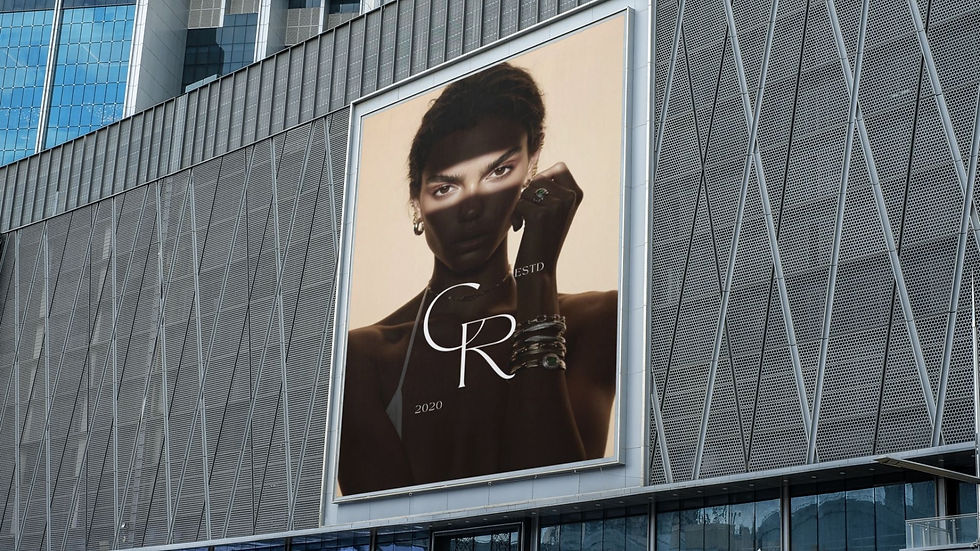
The Technologies that leverage DOOH Marketing
Footfall attribution
When a DOOH advertisement plays, the system identifies mobile devices inside a boundary around the screen, calibrated to screen size, viewing angle and environment. Those device identifiers are matched against devices later seen at your shop or stand, and the exposed group's visit rate is compared against a matched control group. The output is a visit uplift figure: how many extra people walked in.
Insist on three things: how the vendor defines a "visit" — boundary shape, minimum dwell time, exclusions for staff and neighbours. The control group methodology. And realistic expectations: footfall attribution is a steering signal rather than proof of causation. Define measurement before the campaign runs, because retrofitting it afterwards rarely produces trustworthy results. Small campaigns will not reach a usable sample.
Sales and loyalty matching
Exposure can be connected to checkout data using anonymised device IDs, loyalty cards and promotional codes, producing sales uplift, conversion rate and basket size.
The simple version: a campaign-specific code on the creative, matched against till and e-commerce data, with a regional before-and-after comparison.
Dynamic creative optimisation (DCO)
Screens change by data signals such as location, time of day, weather and product availability. Jewellery uses:
Countdowns to Christmas, Valentine's Day, Mother's Day, updating daily.
Weather triggers pushing appointment booking on wet days when people are in shopping centres.
Stock triggers pulling a piece the moment it sells out.
Proximity triggers naming the nearest stockist and walking distance.
Gold price triggers keep pricing messages current without a reprint.
Retargeting the people who saw the screen
Exposed audiences can be retargeted on mobile, and website visits can be attributed back to screen exposure. For a small budget, this is the most valuable capability available, because it turns a broadcast medium into a trackable funnel entry.
Retail media and in-store screens
Retail spaces are becoming data-driven media channels, with screens at entrances, in aisles and near high-intent zones, and retailer first-party purchase data increasingly available for targeting. For jewellery, that means concession screens, shopping centres, and screens inside stockist retail — the closest outdoor gets to bottom of funnel.
Why It Only Works Inside an Omnichannel Plan
76% of consumers take an action after seeing an out-of-home advertisement, with 73% favouring digital formats. It also found that 47% search for social media handles featured on outdoor advertisements and 40% share related content online. An OAAA study with The Harris Poll found 51% of consumers who saw DOOH carrying directions to the nearest shop visited that business.
Every one of those numbers describes an action that happens somewhere else — on a phone, in a search bar, on a social profile, at a shop door. The screen produces the intent. Something else has to catch it. As one industry figure put it in Outsmart's own reporting, out-of-home amplifies digital by driving search, social engagement, online traffic and brand conversation.
The working sequence for a jewellery brand:
Screens run for two to four weeks in a defined area during a dated moment.
Exposed device IDs feed retargeting audiences on Meta and Google.
Paid social carries the same creative system and hero piece, so recognition compounds.
Branded search rises, landing on a campaign page rather than the homepage.
Email and WhatsApp handle objections — sizing, materials, certification, returns, lead time.
The purchase completes in store, in a booked appointment, or online.
Remove step two, and you have paid for awareness you cannot follow up. Remove steps three to six and the screen is an expensive poster.
Two conditions decide whether outdoor earns its place in a jewellery budget: a physical or bookable destination to send people to, and a working retargeting and email system to catch the demand the screens create. Where both exist, DOOH is one of the sharpest tools available in 2026 — geographically precise, measurable against real footfall, and buyable at independent-brand budgets for the first time.
For campaign creative built to work at four metres and on a phone — contact Chocianaite Creative Agency. With more than 8 years in jewellery photography and marketing, we build visual systems that hold up across outdoor, social and e-commerce.


Comments