


How a Middle Eastern Jewellery Brand Can Enter the EU Market and Build a Following That Lasts
The €33 Billion Home Market Is Booming. That's Exactly Why the Smart Money Is Looking West
The Middle East jewellery market was valued at around USD 33.58 billion in 2025, rising toward an estimated USD 36.24 billion in 2026. Gold still carries cultural weight that few Western markets can match. Weddings, Eid, dowry arrangements, births — gold moves through Gulf households as both adornment and stored wealth.
So here's the odd part. A brand can be doing everything right at home and still hit a ceiling. The GCC market is culturally deep but geographically narrow. When a Riyadh, Dubai, or Amman-based label wants its next stage of growth, the question stops being "how do we sell more gold to people who already buy gold" and becomes "how do we reach buyers who have never heard of us, in a market with completely different rules of taste, trust, and compliance."
That market is Europe. And it does not work the way the Gulf does.
TL;DR
The Middle Eastern jewellery market is large and growing, but culturally specific. European buyers respond to different signals: provenance, restraint, and proof of compliance.
Entering the EU is not only a marketing exercise. Since 13 December 2024, any non-EU brand selling consumer products into the EU must appoint an EU-based Responsible Person whose details appear on the product or listing.
The most common reason imported jewellery gets pulled from the EU market is nickel and cadmium release limits under REACH, not design or price.
Winning in Europe depends on visual credibility. Gulf-market imagery — heavy gold, maximalist staging — often reads as "not for me" to a Northern European buyer.
A brand needs four things working together: regulatory clearance, a European visual language, a discovery engine (SEO, social, PR), and consistent proof it can be trusted.
Why Moving West Is Harder Than It Looks
Picture a jewellery house in Dubai with a loyal domestic base. The founder assumes Europe will be easier — more disposable income, mature e-commerce, no language barrier on English-language sites. Then the first shipment gets held at a Dutch port because the earrings lack a nickel-release test report. The first paid ad campaign burns budget because the imagery looks, to a Scandinavian eye, like a hotel gift shop. The first press outreach goes nowhere because no European publication has ever heard the name.
None of these are failures of product quality. They are failures of translation — regulatory, visual, and reputational. Europe rewards brands that have done the unglamorous work. It punishes the ones who assume home-market success transfers automatically.
Three concrete frictions come up again and again:
Compliance is a gate, not a formality. RAPEX and Safety Gate notifications for imported fashion jewellery are a regular occurrence, with cadmium and nickel violations among the most cited reasons. A non-compliant batch does not get a warning. It gets seized.
Discovery is a paid and earned battle. European buyers research before they buy. If a brand does not appear in search results, AI answers, or trusted editorial, it effectively does not exist to a first-time buyer.
Aesthetic mismatch quietly kills conversion. The staging, lighting, and styling that signal luxury in the Gulf can signal the opposite in Copenhagen or Milan. The product photograph is doing more selling than the product.
Six Ways a Middle Eastern Jewellery Brand Can Enter and Grow in the EU
1. Clear the Compliance Gate Before Anything Else
This is the step brands skip and regret. Since 13 December 2024, under the General Product Safety Regulation, a consumer product may only be placed on the EU market if there is an economic operator established in the Union who is responsible for it. For a non-EU brand shipping direct to consumers, that means appointing an EU-based Responsible Person — an importer, distributor, or authorised representative appointed in writing — whose name and contact details appear on the product, packaging, or listing.
Then there is chemical compliance. Nickel restrictions under REACH Annex XVII are the most common cause of jewellery compliance failures. Any item intended for prolonged skin contact — earrings, necklaces, rings, bracelets — must meet a strict nickel release limit, tested to EN 1811. A common trap: a supplier provides a total-nickel-content report, which does not demonstrate compliance. Lead and cadmium carry their own Annex XVII limits.
Operational cost of getting this wrong: seized shipments, delisting from Amazon, Etsy, or Shopify for non-EU sellers without a Responsible Person, and the reputational damage of a public Safety Gate alert. Getting it right is paperwork. Getting it wrong is a border seizure.
2. Rebuild the Visual Language for a European Eye
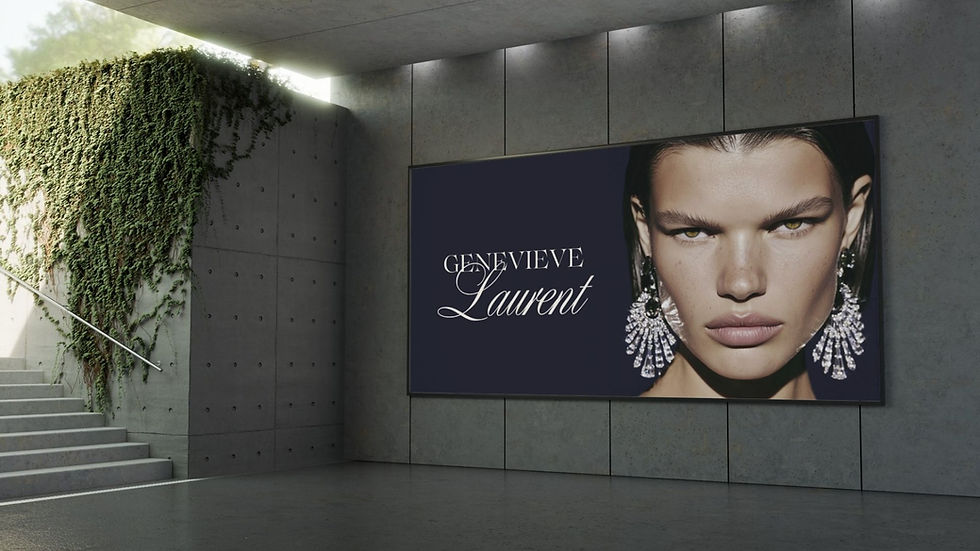
Gulf-market photography tends toward warmth, density, and gold-forward staging. Much of the European premium market — particularly Northern Europe and Scandinavia — reads luxury through restraint: negative space, cool or neutral light, editorial minimalism, skin and texture over gloss.
This is not a matter of one being better. It is a matter of fluency. A buyer decides in under a second whether a brand is "for people like me." The photograph makes that call before a single word of copy is read. A brand entering the EU needs a distinct visual system for that market: e-commerce packshots that meet European marketplace standards, and model and campaign imagery that speaks the local dialect of desire.

3. Build a Discovery Engine: SEO, GEO, and Social
European buyers search. They compare. They ask AI assistants for recommendations before they open a shopping tab. A brand that is invisible in search and in AI-generated answers is invisible to every buyer who does not already know its name — which, on entry, is nearly all of them.
That means content built to rank and to be cited: product and category pages structured for search intent, editorial that answers the questions buyers actually type, and a social presence tuned to European platforms and tastes. Brands cited in Google's AI Overviews see meaningfully higher organic clicks than those that are not, which makes structured, citable content a direct commercial asset rather than a vanity project.
4. Earn Third-Party Credibility Through PR and Partnerships
A European first-time buyer trusts other sources more than she trusts the brand's own claims. One placement in a respected trade or consumer title, a stockist relationship with a known European retailer, or a collaboration with a credible local name does more for trust than any amount of self-description. Independent corroboration is also what AI systems weigh when deciding which brands to recommend. A brand with no external footprint is a brand the algorithm cannot vouch for.
5. Localise Logistics, Pricing, and Returns
Duty, VAT, and delivery expectations differ across member states. Import duties and VAT vary, and hallmarking requirements differ by market, with some EU states operating their own precious-metal hallmarking rules. A European buyer expects transparent landed pricing, a local-feeling returns process, and fast, tracked delivery. Friction here converts browsers into abandoned carts. This is unglamorous operational work, and it is where many otherwise strong entries quietly leak revenue.
6. Partner With a Creative Agency That Only Works in Jewellery — Chocianaite
Most of the above — the European visual system, the search and AI-citation strategy, the campaign assets, the editorial that earns trust — sits in one discipline: creative and brand growth built specifically for jewellery. This is where Chocianaite fits.
Chocianaite works exclusively with jewellery brands across the UK, EU, and US. That single focus is the point. A Middle Eastern brand entering Europe is not paying for an agency to learn the category on its budget. It is buying category fluency: jewellery-specific photography (e-commerce packshots, model and AI photography), creative direction, branding, and the SEO and editorial content that makes a brand findable and citable in a new market.
For a brand crossing from the Gulf to Europe, the practical outcome is a coherent European-facing identity — imagery a Milanese or Berlin buyer recognises as for her, content that ranks and gets quoted, and campaign assets that hold together across channels. The likely result: shorter time to first trust, lower wasted ad spend on mismatched creative, and a brand that reads as established in Europe rather than newly arrived. Brands ready to start can book a discovery call.
Comparison: What Works at Home vs What Works in the EU
Factor | Gulf home market | EU market |
Primary trust signal | Gold weight, family reputation, souk presence | Provenance, compliance proof, third-party press |
Winning aesthetic | Warm, gold-forward, maximalist | Restrained, editorial, neutral light (varies by region) |
Discovery channel | Word of mouth, physical retail, referral | Search, AI answers, social, editorial |
Regulatory barrier | Local hallmarking, DMCC gold standards | GPSR Responsible Person + REACH nickel/cadmium/lead limits |
Buyer behaviour | Relationship and occasion-led | Research-led, comparison-heavy |
Biggest hidden cost | Low | Non-compliant shipments seized at border |
Note: regional aesthetic preferences within Europe vary. Scandinavian minimalism and Southern European maximalism are not the same buyer. Treat "the EU" as several markets, not one.
Why Act Now
Two windows are open at once. The home market's strength gives a brand the cash and confidence to fund an expansion — the GCC jewellery market is projected to keep growing through 2032. And the EU's compliance regime has just tightened, which means the brands that clear the GPSR and REACH bar early will look established while later entrants are still stuck at the border.
The practical move for a Middle Eastern brand right now: confirm your Responsible Person and REACH test reports before you spend a euro on marketing, then build the European visual and content system in parallel so that the moment you are legally clear, you are also findable and desirable. Doing these in sequence wastes months. Doing them together is how a brand lands in Europe already looking like it belongs there.


Comments